A Museum Visit Built Around One Artwork
A museum visit built around one artwork helps you see more clearly: choose a work, study its visible details, read the label afterward, and note what changed.
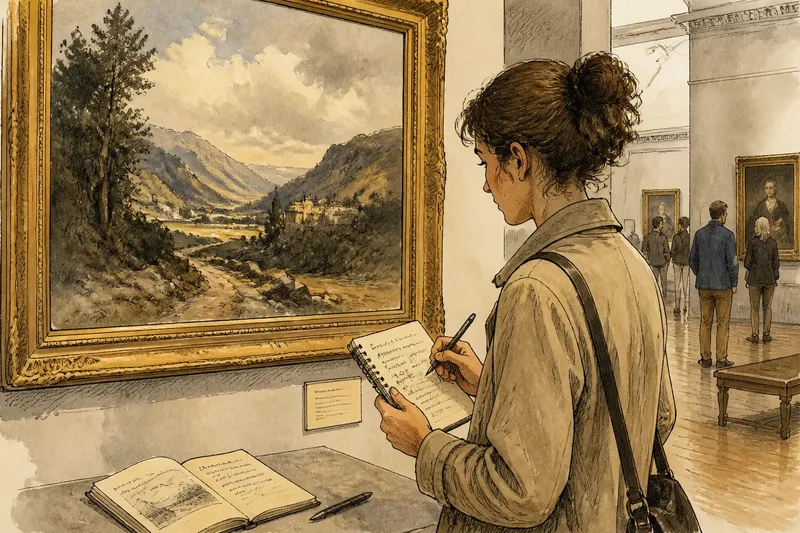
How do you make a museum visit feel satisfying when the galleries are crowded, your time is short, or every wall seems to ask for attention? Build your museum visit around one artwork. Choose a piece that catches you, look closely before reading its label, then record how the information changes—or does not change—your understanding.
This approach suits a Western art museum particularly well. A painted landscape, a portrait, a woven object, or a tool can hold more to notice than a quick glance reveals. The point is not to uncover a secret meaning or spend an impressive amount of time in front of one frame. It is to give your attention a clear place to land, then decide what you want from the rest of the visit.
Choose by your situation
The right artwork is not necessarily the most famous one, the largest one, or the piece with the longest label. Let the conditions of your visit guide the choice.
- If you have little time: Choose a work that is easy to approach and has details visible from a comfortable viewing spot. A small painting in a clear sightline may suit better than a crowded centerpiece you can barely see.
- If the galleries feel overwhelming: Look for a work that draws your eye without demanding an explanation. A strong shape, an unusual color, or a familiar subject can offer a simple starting point.
- If you came with a specific interest: Pick a work connected to it, such as a Western landscape, a portrait, or an object made from a material you want to understand. A focused choice gives your curiosity somewhere concrete to begin.
- If you are with someone else: Agree to share one work, but let each person choose a detail to notice. A child might focus on an animal; an adult might notice the horizon or the frame.
- If you are unsure where to begin: Walk through one gallery at an unhurried pace, then stop at the first work that holds your attention. You do not need to know why before you begin looking.
There is no need to settle on a masterpiece. A modest picture that invites you to look again can make a more rewarding anchor than a celebrated work that you feel obliged to admire.
Set a simple intention
Before you start, choose a question that keeps your attention open. It might be, “What do I notice first?” or “Which detail changes when I look again?” Avoid trying to guess the artist’s intention before you have examined what is actually there. Your first task is observation, not interpretation.
Give yourself permission to stop when your attention has run its course. The method does not depend on a timer or a required number of minutes. If you feel restless, shift your stance, step back, or take a brief pause. If another visitor is waiting to see the work, leave room and return later if the gallery allows it.
It can help to notice the setting, too. Is the work high or low on the wall? Is the light even? Can you see it from several positions without blocking others? These details shape your encounter, but they should not become a reason to handle barriers, lean over ropes, or disrupt the room. Follow the gallery’s posted guidance.
Look before reading
Start with what is plainly visible. Name the subject, if you can, then notice the arrangement: where the largest shapes sit, where the eye travels, and what parts seem close or far away. A landscape may draw you toward a distant ridge; a portrait may hold your attention at the face, then lead you to the sitter’s clothing or hands.
Move from broad impressions to smaller details. Look at edges, repeated forms, shifts in color, and areas that seem especially bright or dark. Notice whether the surface appears smooth, rough, layered, or marked by visible strokes. You do not need technical vocabulary. “The sky changes from gray to pale gold” is a useful observation; so is “the brush marks are easy to see.”
Pay attention to what the work leaves uncertain. A path may disappear behind a rise. A figure may look toward something outside the frame. A patch of color might be difficult to identify. Let those questions remain open for a moment rather than rushing to explain them.
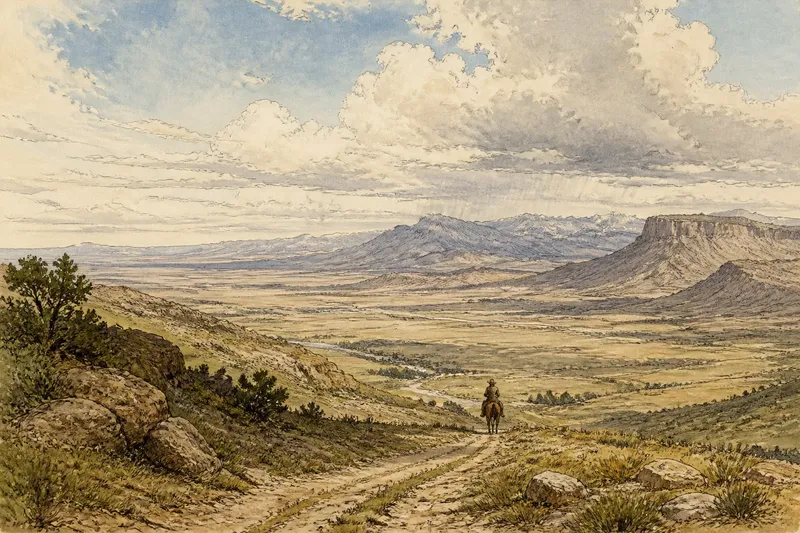
Say you stop in front of an invented landscape painting because a dark line across the valley catches your eye. You first take it for a road, then notice that it bends into a cluster of buildings. That small correction gives you something specific to compare with the label later: what you could see, what you inferred, and what remained unclear.
Read the label afterward
Once you have formed your own account of the work, read its label. Look for information that connects directly to what you noticed: the artist, title, materials, date or period, subject, and any short interpretive note. A label may identify a place, explain a technique, or clarify why a detail matters. It may also leave your main question unanswered.
Separate the label’s information from your own response. “The label identifies the scene as a particular region” is different from “the scene feels lonely to me.” Both belong in a thoughtful visit, but they are not the same kind of claim. Keeping them distinct lets you appreciate the work without treating every impression as a fact.
If the label uses a term you do not know, you can look it up in a museum glossary or ask a gallery staff member if one is available. If the label is crowded or difficult to read, do not force yourself to absorb every line. Choose the details that bear on your question and leave the rest for another time.
What should you notice first?
Should you choose a famous artwork?
Choose it if you genuinely want to see it, but fame is not a requirement. A quieter work may offer clearer space to look and a stronger personal connection.
How long should you stay?
Stay until you have noticed something beyond your first impression and read the label, if you wish. Leave when your attention is ready to move; there is no useful minimum.
What if you do not understand the work?
Describe what you can see without forcing a meaning. Uncertainty can be part of the encounter, and the label may add context without settling every question.
Can you take notes or a photo?
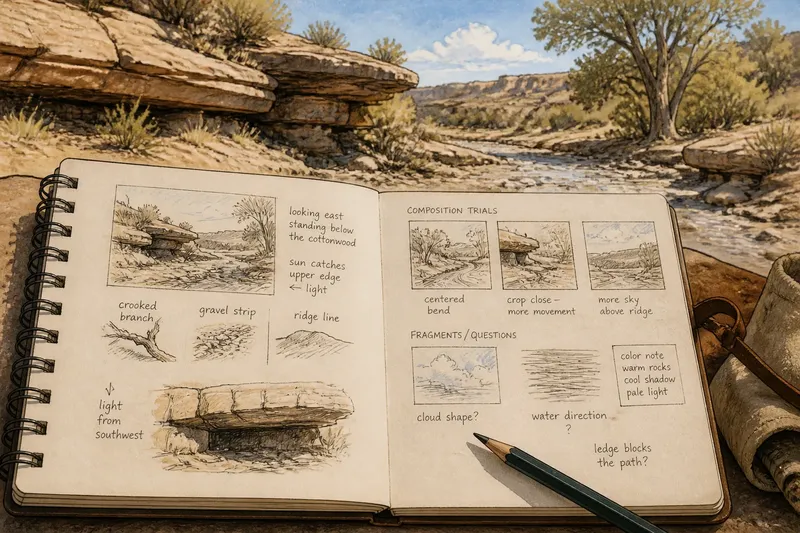
Notes can be brief: a few words, a sketch, or a question to revisit. Photography rules vary by gallery, so check posted guidance and use a notebook if photos are not allowed.
Choose what to record
A note is most useful when it captures a change, not a full inventory. Write down your first impression, one visible detail, and one piece of label information that shifted your view. If nothing shifted, note that too. The label may have confirmed what you already saw, or the work may still feel open-ended.
For example, in the invented landscape above, a visitor might write: “First: road through the valley. Detail: the line turns toward the buildings. Label: identifies the place. Now: I see the route as part of a settled landscape, not just a dark mark.” That note keeps observation, label information, and interpretation in view without pretending they are interchangeable.
Use whatever is comfortable: a pocket notebook, the notes app on your phone, or a museum handout. Keep the record short enough that it does not take you away from looking. If writing feels like work, hold one question in mind and answer it quietly before you leave the gallery.
Decide what comes next
After your focused look, choose the next part of the visit according to how you feel. If you are curious, find another work that shares one visible feature, such as a similar horizon, material, or subject. Comparing two works can sharpen your eye without turning the visit into a hunt for matching answers.
If you feel ready for a change, move to a different gallery or take a break. If you are visiting with a companion, trade observations: each of you can name one detail the other missed. Keep the conversation grounded in what is visible before moving to guesses about meaning. This makes room for different responses without turning one person’s reading into the correct answer.
You might also decide that one artwork is enough for the day. A focused visit is not a lesser version of a museum visit. It is a choice to give one object your attention and leave with a more precise memory than “I saw a lot.”
A museum visit built around one artwork can be especially useful when you want to look at Western art without rushing past its particular details. Choose a work that fits your time and mood, notice what it shows before consulting the label, then write down what changed. On a later visit, bring the question you left unanswered; returning with a fresh eye can reveal a new detail without requiring you to replace your first response.